

How to Choose a Trusted Saffron supplier

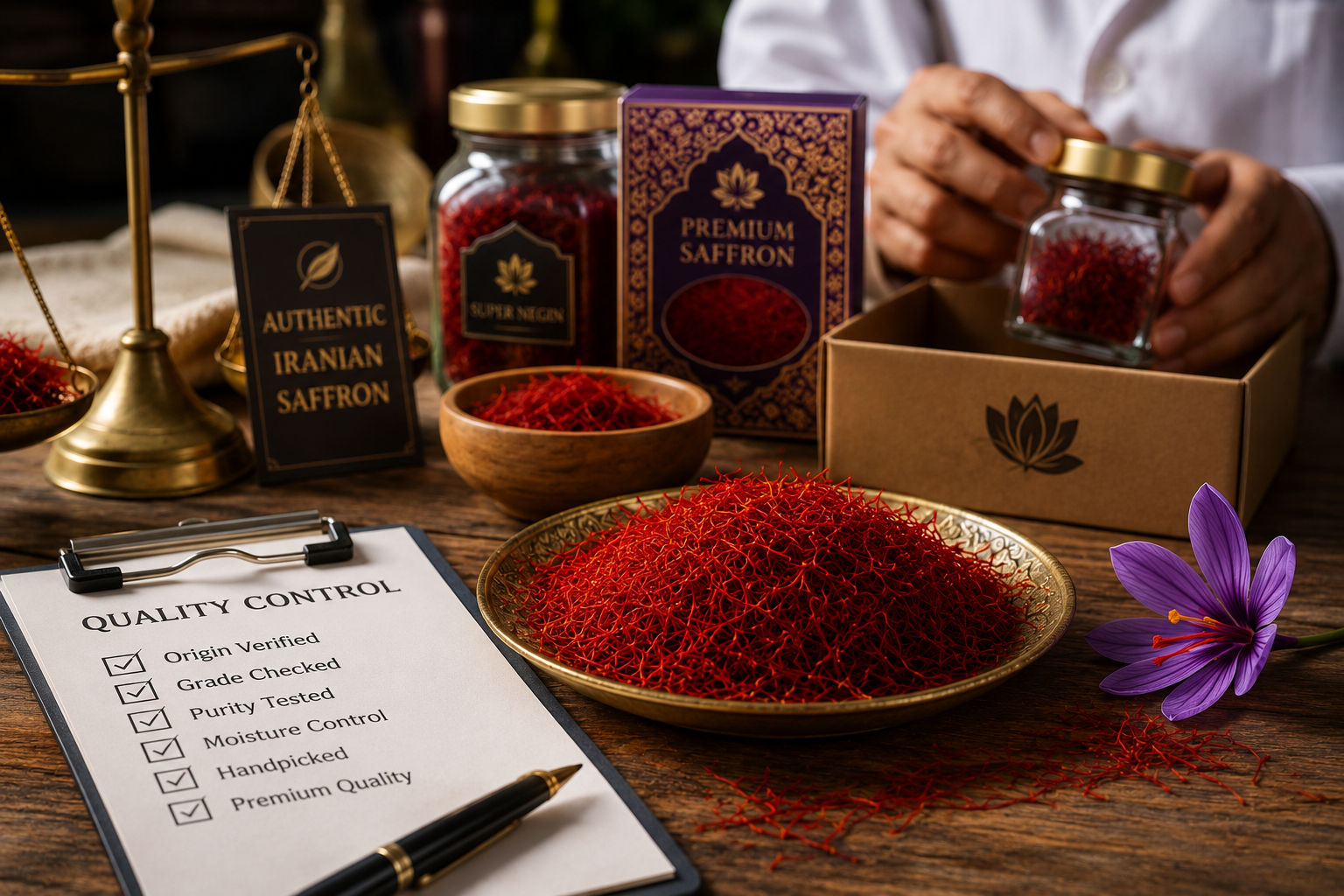
How to Choose a Trusted Saffron supplier Without Risking Quality
Finding the right Saffron supplier is one of the most important decisions for anyone buying premium saffron, whether for personal use, restaurants, food manufacturing, retail distribution, or international import. Although saffron is celebrated as the world’s most valuable spice, its high market price has unfortunately encouraged counterfeit products, misleading marketing claims, and inconsistent quality standards. Buyers who focus exclusively on price often discover that inexpensive saffron delivers disappointing color, weak aroma, poor flavor, or even contains artificial additives that reduce both quality and value.
A professional Saffron supplier does far more than simply sell saffron. Reliable suppliers invest in responsible sourcing, maintain strict quality control, provide transparent grading information, follow international packaging standards, and establish long-term relationships with growers who understand every stage of saffron cultivation. These factors ensure that customers receive authentic saffron capable of delivering the exceptional aroma, coloring strength, and culinary performance expected from a premium product.
This comprehensive guide explains everything buyers should evaluate before selecting a trusted Saffron supplier. From understanding sourcing practices and quality certifications to recognizing warning signs, comparing suppliers, reviewing packaging methods wich is so importent for seeling , and asking the right questions before placing an order, you’ll gain the practical knowledge necessary to purchase confidently while protecting your investment.

Saffron supplier
Table of Contents
Why Choosing the Right Saffron supplier Matters More Than Price
Many buyers assume that saffron is essentially the same regardless of who supplies it, believing that the only meaningful difference lies in price. In reality, supplier selection directly determines product quality, freshness, purity, consistency, and long-term customer satisfaction. Two suppliers may offer saffron described as premium grade while delivering products with dramatically different coloring strength, aroma, harvesting methods, storage conditions, and packaging quality.
The most reputable Saffron supplier works closely with experienced farmers throughout the harvesting season, ensuring flowers are collected at the correct stage of maturity and processed under carefully controlled conditions. This attention to detail preserves valuable natural compounds responsible for saffron’s distinctive characteristics while minimizing contamination and quality deterioration.
Reliable suppliers also implement strict inspection procedures before products enter the market. Each batch should undergo visual examination, grading, moisture evaluation, and in many cases laboratory analysis to verify purity and compliance with internationally recognized quality standards. Such quality assurance significantly reduces the risk of receiving adulterated or low-grade saffron.
Expert Insight: Choosing a trusted Saffron supplier often saves money in the long run because premium saffron delivers stronger coloring power, meaning less product is required for each recipe.
Characteristics of a Professional Saffron supplier
Not every business selling saffron qualifies as a professional supplier. Genuine suppliers distinguish themselves through transparency, consistency, industry knowledge, and a clear commitment to quality throughout the entire supply chain. Instead of focusing solely on marketing claims, buyers should evaluate measurable indicators of reliability.
Transparent Product Information
A trustworthy Saffron supplier provides detailed product descriptions that clearly identify the country of origin, saffron grade, harvest season, packaging specifications, storage recommendations, and intended applications. Transparency allows customers to compare products objectively rather than relying on vague promotional language.
Consistent Quality Standards
Premium suppliers maintain consistent quality across every shipment. Restaurants, wholesalers, and food manufacturers depend on receiving saffron with predictable aroma, color, and flavor because inconsistencies can negatively affect recipes, customer satisfaction, and brand reputation.
Professional Packaging
Packaging is far more than an attractive presentation. Proper airtight containers protect saffron against moisture, oxygen, excessive light, and environmental contamination, preserving freshness throughout transportation and storage. A reputable Saffron supplier understands that superior packaging directly influences shelf life and customer satisfaction.
| Supplier Feature | Trusted Supplier | Unreliable Supplier |
|---|---|---|
| Origin Transparency | Complete information | Unclear or missing |
| Quality Control | Laboratory tested | No testing information |
| Packaging | Airtight premium packaging | Basic packaging |
| Customer Support | Responsive and knowledgeable | Limited communication |
| Product Consistency | Stable quality | Variable quality |
Why the Origin of Saffron Should Never Be Overlooked
The origin of saffron significantly influences its quality, aroma, coloring strength, and overall value. A knowledgeable Saffron supplier openly explains where the saffron was cultivated and how it was processed before reaching customers. Rather than avoiding questions about sourcing, reliable suppliers proudly share information about growing regions, harvesting practices, and quality assurance procedures because transparency builds trust.
Understanding origin also enables buyers to compare products more effectively. Different growing regions may produce saffron with varying sensory characteristics, but consistent sourcing from experienced producers generally results in more predictable quality. This consistency is particularly valuable for businesses that require identical flavor profiles across multiple production batches.

How a Trusted Saffron supplier Maintains Consistent Quality
Quality is never achieved accidentally , Every reputable Saffron supplier follows a carefully controlled process that begins long before the saffron reaches warehouses or customers. From selecting experienced growers to monitoring harvesting conditions, drying techniques, grading procedures, storage, and packaging, each stage directly influences the final product’s performance. Suppliers who overlook even one of these steps risk compromising aroma, coloring strength, shelf life, and customer satisfaction.
Professional suppliers establish long-term partnerships with growers who understand the delicate nature of saffron cultivation. Since saffron flowers bloom for only a short period each year, harvesting must be completed within a limited timeframe while preserving the fragile crimson stigmas. Mishandling during harvesting or drying can significantly reduce the concentration of crocin, safranal, and picrocrocin—the natural compounds responsible for saffron’s color, aroma, and flavor.
After harvesting, quality-focused suppliers carefully inspect every batch before packaging. This process typically includes removing damaged or broken threads, checking moisture content, evaluating thread uniformity, and confirming that foreign materials have not contaminated the product. These additional quality assurance procedures distinguish professional suppliers from traders who simply purchase and resell saffron without adequate inspection.
Laboratory Testing and International Standards
One of the strongest indicators of a reliable Saffron supplier is the willingness to provide objective quality documentation. Many premium suppliers test their saffron according to internationally recognized quality standards, measuring characteristics such as coloring strength, aroma intensity, moisture level, and purity. These laboratory evaluations provide buyers with measurable information instead of relying solely on marketing claims.
Although not every customer requests laboratory reports, wholesalers, distributors, restaurants, and food manufacturers often consider such documentation essential because it demonstrates consistency between different production batches.
Proper Storage Throughout the Supply Chain
Maintaining saffron quality does not end after harvesting. Storage conditions throughout transportation and warehousing are equally important. Premium saffron should remain protected from humidity, excessive heat, direct sunlight, and prolonged exposure to oxygen. Even perfectly harvested saffron may gradually lose its remarkable aroma if stored improperly before reaching customers.
An experienced Saffron supplier invests in controlled storage facilities designed to preserve freshness from harvest until delivery. This attention to detail helps ensure customers receive saffron that performs exactly as expected in both culinary and commercial applications.
| Quality Control Step | Purpose | Benefit for Buyers |
|---|---|---|
| Careful Harvesting | Protect delicate stigmas | Superior aroma and color |
| Manual Thread Selection | Remove damaged material | Higher purity |
| Controlled Drying | Preserve natural compounds | Longer shelf life |
| Laboratory Testing | Verify quality standards | Greater confidence |
| Protective Packaging | Prevent moisture and oxidation | Freshness during transport |
Need a Reliable Saffron supplier?
Partner with experienced professionals who prioritize transparency, verified quality, and responsible sourcing to ensure every shipment meets premium international standards.
Questions Every Buyer Should Ask a Saffron supplier
Choosing a supplier becomes significantly easier when buyers ask thoughtful questions before making a purchase. Honest suppliers appreciate informed customers because transparency strengthens long-term business relationships, whereas unreliable sellers often avoid providing specific details regarding sourcing or quality verification.
Where Does Your Saffron Come From?
A trustworthy Saffron supplier should immediately identify the country and, whenever possible, the producing region. Suppliers who hesitate to discuss product origin may be purchasing from multiple unknown sources, making quality consistency difficult to guarantee.
Which Grade Are You Selling?
Understanding whether the product is Super Negin, Negin, Sargol, Pushal, or another commercial grade allows buyers to compare products fairly instead of relying on vague descriptions such as “premium quality.” Reliable suppliers explain grading systems clearly and recommend the most suitable option according to each customer’s intended application.
Can You Provide Quality Documentation?
Many professional suppliers offer certificates of analysis, laboratory reports, export documentation, or quality assurance records upon request. Although requirements differ between retail and wholesale customers, suppliers capable of providing objective documentation generally demonstrate stronger quality management practices.
How Is the Product Packaged?
Packaging directly influences freshness. Ask whether saffron is sealed inside airtight containers designed to protect against humidity, oxygen, and sunlight during storage and transportation.
Professional Advice: The best Saffron supplier welcomes detailed questions instead of avoiding them. Transparency is often the clearest sign of professionalism.
Common Mistakes When Choosing a Saffron supplier
Many purchasing mistakes occur because buyers focus on a single factor rather than evaluating suppliers comprehensively. Avoiding these common errors can significantly reduce the risk of receiving low-quality saffron.
- Choosing the lowest price without considering quality.
- Ignoring information about product origin.
- Failing to verify the saffron grade.
- Buying without reading verified customer reviews.
- Assuming every supplier follows identical quality standards.
- Overlooking packaging quality and storage recommendations.
- Purchasing from businesses that cannot explain their sourcing process.
Comparing Wholesale and Retail Saffron Suppliers
Retail suppliers generally focus on small consumer packages suitable for home kitchens and gourmet enthusiasts, while wholesale suppliers serve restaurants, retailers, distributors, food manufacturers, and international importers. Understanding these differences helps buyers choose suppliers capable of meeting both quality expectations and order volume requirements.
| Feature | Retail Supplier | Wholesale Supplier |
|---|---|---|
| Order Size | Small quantities | Bulk orders |
| Packaging | Consumer-ready | Bulk or customized |
| Customization | Limited | Private label options |
| Target Customers | Home users | Businesses & distributors |
| Pricing Structure | Retail pricing | Volume discounts |
Why Building a Long-Term Relationship with a Saffron supplier Matters
For businesses that purchase saffron regularly, selecting a Saffron supplier should not be viewed as a one-time transaction. Instead, it should be considered the beginning of a long-term partnership built on consistency, transparency, and mutual trust. Whether you operate a restaurant, distribute gourmet ingredients, manufacture food products, or manage an online retail business, maintaining a reliable supplier relationship helps ensure stable product quality while reducing purchasing risks over time.
Long-term suppliers become familiar with your business requirements, preferred grades, packaging specifications, delivery schedules, and quality expectations. As a result, communication becomes more efficient, inventory planning improves, and unexpected quality variations become less likely. Reliable partnerships also make it easier to secure inventory during years when saffron production is lower due to weather conditions or market fluctuations.
Professional suppliers understand that their reputation depends on customer success. Rather than focusing solely on completing individual sales, they invest in maintaining consistent quality standards, responding promptly to inquiries, and providing accurate information that helps customers make informed purchasing decisions.
Important Certifications a Professional Saffron supplier Should Offer
Although certifications vary depending on export destination and customer requirements, a reputable Saffron supplier should be able to explain the quality assurance procedures followed throughout the production and packaging process. Documentation demonstrates professionalism while increasing buyer confidence, particularly for wholesalers and international importers.
Quality management systems, food safety certifications, export documentation, laboratory analyses, and traceability records all indicate that a supplier follows structured operating procedures rather than relying on inconsistent manual practices. While smaller retail purchases may not require every certificate, commercial buyers often consider documented quality assurance an essential requirement before establishing long-term partnerships.
| Certification or Document | Purpose | Why It Matters |
|---|---|---|
| Certificate of Analysis (COA) | Confirms laboratory quality results | Verifies purity and consistency |
| ISO Quality Standards | Quality management guidance | Supports standardized production |
| Food Safety Documentation | Demonstrates safe handling practices | Builds customer confidence |
| Export Documentation | Supports international shipments | Facilitates customs clearance |
| Traceability Records | Tracks product origin | Improves transparency |
Buying Insight: A professional Saffron supplier never hesitates to discuss sourcing, grading, quality control, or documentation. Transparency is one of the strongest indicators of reliability.
How to Evaluate a Saffron supplier Before Ordering Online
The rapid growth of e-commerce has made premium saffron available to customers worldwide. However, it has also increased the number of businesses making exaggerated marketing claims without providing sufficient evidence of product quality. Before purchasing online, buyers should carefully evaluate the supplier’s credibility using objective criteria instead of relying solely on attractive website design or promotional discounts.
Begin by reviewing detailed product descriptions. A trustworthy Saffron supplier clearly identifies the saffron grade, country of origin, packaging specifications, storage recommendations, and intended applications. Product photographs should display actual saffron threads rather than generic stock images that reveal little about the product itself.
Customer reviews also provide valuable insights, particularly when they describe consistent quality across multiple purchases rather than isolated experiences. Verified reviews discussing aroma, coloring strength, packaging quality, delivery reliability, and customer support often provide a more realistic picture than promotional advertising.
Another important factor is communication. Professional suppliers respond promptly, answer technical questions accurately, and willingly provide additional information when requested. Delayed responses, vague answers, or unwillingness to discuss sourcing practices should encourage buyers to proceed cautiously.
Signs of a Reliable Website
- Complete company information and contact details.
- Clear product specifications.
- Secure online payment methods.
- Transparent shipping and return policies.
- Professional customer support.
- Educational content demonstrating industry expertise.
Choose a Saffron supplier You Can Trust
Premium saffron begins with responsible sourcing and uncompromising quality standards. Work with a supplier committed to transparency, authenticity, and long-term customer satisfaction.
For additional guidance regarding international food standards and agricultural trade, consult the Food and Agriculture Organization (FAO) and the International Organization for Standardization (ISO), both of which provide valuable information related to food quality management and international trade practices.
Final Thoughts on Choosing the Right Saffron supplier
Selecting the right Saffron supplier is about far more than comparing prices or finding the quickest shipping option. It is an investment in product quality, customer satisfaction, and long-term business success. Premium saffron is one of the world’s most valuable agricultural products, and its true value can only be preserved when every stage of the supply chain—from cultivation and harvesting to grading, packaging, storage, and transportation—is managed with precision and integrity.
A trustworthy Saffron supplier is transparent about product origin, maintains consistent quality standards, provides professional customer support, and understands the importance of preserving saffron’s natural aroma, vivid color, and delicate flavor. Whether you are a home cook seeking authentic ingredients, a restaurant committed to culinary excellence, or a wholesale distributor serving international markets, choosing the right supplier significantly reduces purchasing risks while ensuring every shipment meets your expectations.
Instead of making purchasing decisions based solely on price, evaluate suppliers according to their expertise, sourcing practices, certifications, communication, and commitment to quality assurance. Businesses that invest in long-term partnerships with reputable suppliers often experience greater consistency, stronger customer trust, and fewer quality-related issues than those constantly changing suppliers in search of lower prices.
Need more help for buying Saffron?
Let’s Discuss Your Wholesale Requirements
Looking for a reliable saffron supplier? Contact our team for wholesale pricing,
export inquiries, private label services, and premium Iranian saffron.
Frequently Asked Questions
1. Why is choosing the right Saffron supplier so important?
A professional Saffron supplier helps ensure that the saffron you purchase is authentic, properly graded, carefully packaged, and consistently high in quality. Reliable suppliers also reduce the risk of counterfeit or adulterated products.
2. What should I ask before choosing a Saffron supplier?
Ask about the country of origin, saffron grade, harvest season, quality control procedures, laboratory testing, packaging methods, and available certifications. Transparent answers usually indicate a trustworthy supplier.
3. Can I trust online saffron suppliers?
Yes, provided they clearly disclose sourcing information, offer secure payment methods, publish detailed product specifications, and have a strong reputation supported by verified customer reviews.
4. Does packaging affect saffron quality?
Absolutely. Airtight packaging protects saffron from moisture, oxygen, and sunlight, helping preserve its aroma, color, and flavor for a longer period.
5. How do I know if a supplier sells genuine saffron?
Look for transparent product information, consistent grading, quality documentation, positive customer feedback, and clear communication regarding sourcing and harvesting practices.
6. What is the best saffron grade for commercial buyers?
Many restaurants, distributors, and exporters prefer Super Negin or Negin grades because they offer exceptional appearance, coloring strength, and aroma suitable for premium markets.
7. Should I always choose the cheapest supplier?
No. Extremely low prices often indicate lower quality, inconsistent grading, or even counterfeit products. Long-term value comes from purchasing authentic saffron that performs consistently.
8. Why do reputable suppliers provide laboratory reports?
Laboratory testing verifies important quality characteristics such as purity, coloring strength, aroma, and moisture content, giving buyers greater confidence in the product they receive.