

Iranian saffron: Everything You Need Before Buying Premium Saffron


Iranian saffron: Everything You Need Before Buying Premium Saffron
Buying Iranian saffron should never be treated as an ordinary grocery purchase. Although saffron is sold in supermarkets, gourmet food stores, and online marketplaces across the world, only a small percentage truly represents the premium quality that has made Iranian saffron internationally respected for centuries. Behind every delicate crimson thread lies months of cultivation, careful harvesting by hand, meticulous drying, and strict quality selection. Understanding these details allows buyers to distinguish authentic premium saffron from products that merely imitate its appearance.
Whether you are purchasing saffron for cooking, baking, herbal infusions, luxury gifting, or commercial distribution, making an informed decision requires more than comparing prices. The highest-quality saffron offers exceptional aroma, powerful coloring strength, rich flavor, and outstanding purity—qualities that cannot be replicated through artificial coloring or chemical additives.
This comprehensive buying guide explores everything you should know before investing in premium Iranian saffron. From understanding its origin and grading system to recognizing authentic threads, evaluating packaging, comparing prices, and avoiding common scams, you’ll gain practical knowledge that helps you purchase with complete confidence.
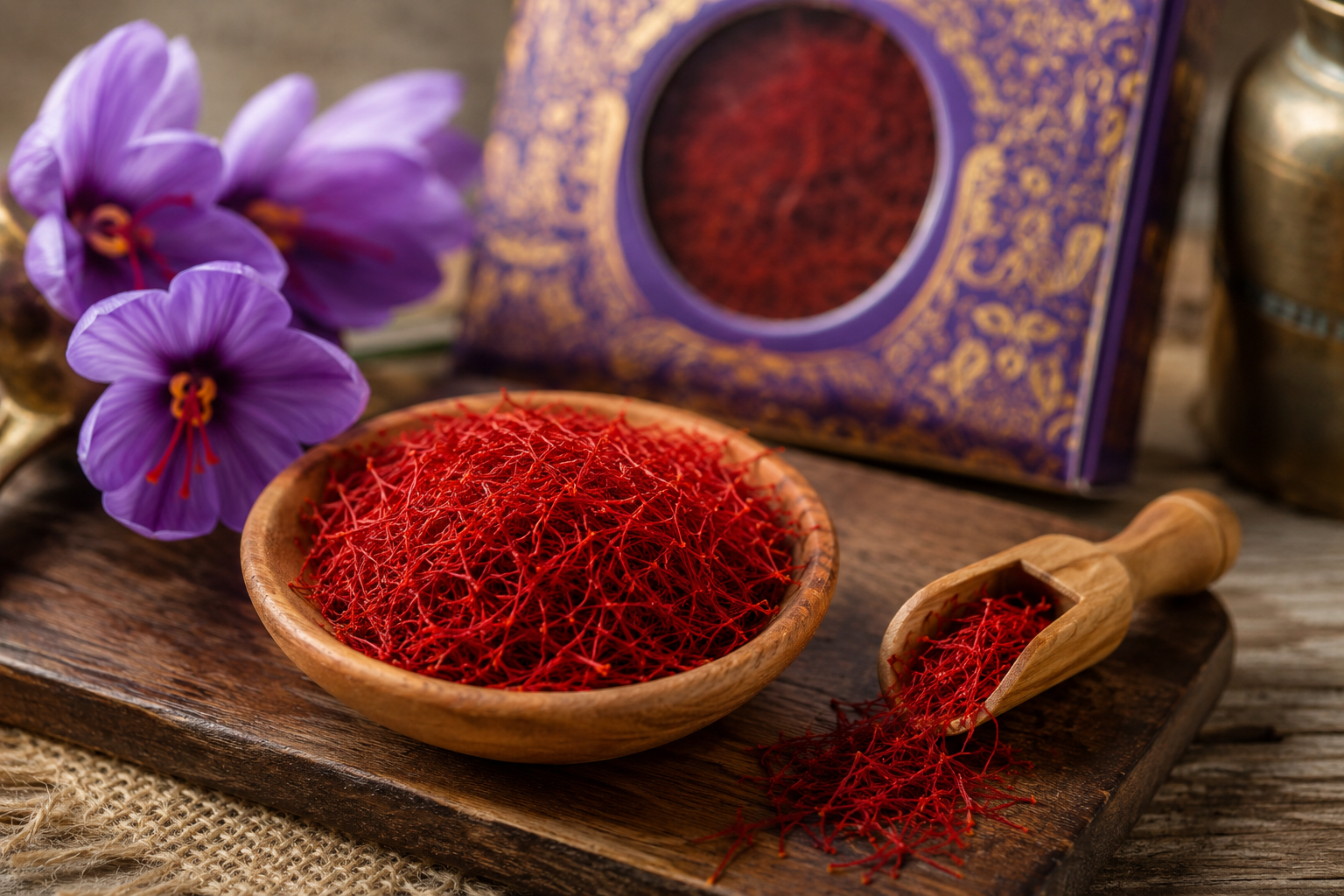
Iranian saffron
Table of Contents
Why Iranian saffron Continues to Dominate the Global Market
For generations, Iran has remained the world’s largest producer of saffron, supplying close to ninety percent of global production. This remarkable achievement is not simply the result of large cultivation areas; rather, it reflects an extraordinary combination of ideal climate, experienced farmers, fertile soil, and centuries of accumulated agricultural knowledge.
The northeastern provinces of Iran, particularly Khorasan, provide nearly perfect environmental conditions for saffron cultivation. Hot summers encourage healthy bulb development, while cold winters prepare the crocus flowers for a productive blooming season. This unique climate contributes directly to the exceptional concentration of crocin, picrocrocin, and safranal—the three natural compounds responsible for saffron’s brilliant color, pleasant bitterness, and unmistakable aroma.
Unlike many agricultural products that rely heavily on industrial machinery, premium Iranian saffron is still harvested almost entirely by hand. Farmers begin collecting flowers before sunrise because the delicate blossoms must be protected from direct sunlight, excessive heat, and moisture loss. Every flower is picked individually, preserving its fragile stigmas until they are carefully separated later in the day.
Important: Approximately 150,000 to 170,000 flowers are required to produce just one kilogram of premium saffron, making it one of the most labor-intensive agricultural products in the world.
What Makes Iranian saffron Different from Other Origins?
Although saffron is cultivated in countries such as Spain, Afghanistan, Greece, Morocco, and India, experienced chefs and professional buyers consistently recognize Iranian saffron for its exceptional balance of color intensity, aroma, purity, and value. While every producing region offers its own characteristics, Iranian saffron has established an international benchmark because of its consistently high concentrations of natural active compounds.
One of its most remarkable characteristics is coloring strength. The rich crimson stigmas contain abundant crocin, allowing even a small quantity to transform rice, desserts, soups, sauces, beverages, and pastries into dishes with an elegant golden appearance. High-quality saffron should release color gradually, creating a deep golden hue rather than an immediate artificial red stain.
Equally impressive is its aroma. Genuine Iranian saffron delivers a sophisticated fragrance combining floral sweetness, delicate honey notes, warm hay, and subtle earthy undertones. The scent should never resemble chemicals, perfume, or synthetic fragrances. Any unusually strong or artificial smell often indicates poor-quality processing or adulteration.
Natural Flavor That Cannot Be Imitated
Unlike ordinary spices that contribute only heat or sweetness, saffron introduces extraordinary complexity. Authentic Iranian saffron provides gentle bitterness balanced by floral sweetness and earthy warmth, creating depth without overpowering other ingredients. This distinctive flavor profile explains why premium saffron is valued not only in Persian cuisine but also in Mediterranean, Indian, Arabic, and contemporary international gastronomy.
| Feature | Premium Iranian Saffron | Low-Quality Saffron |
|---|---|---|
| Color | Deep crimson red threads | Mixed yellow and pale strands |
| Aroma | Rich floral and honey-like fragrance | Weak or artificial smell |
| Flavor | Balanced floral bitterness | Flat or slightly metallic taste |
| Purity | 100% natural stigmas | Often mixed with fillers |
| Coloring Strength | Excellent | Poor |
How Iranian saffron Is Harvested with Exceptional Precision
The remarkable quality of Iranian saffron begins long before the finished product reaches consumers. Every stage of production requires patience, expertise, and extraordinary attention to detail. Unlike many spices that can be harvested mechanically, saffron flowers bloom for only a short period each autumn, creating a narrow harvesting window that demands rapid yet careful manual labor.
Harvesting begins before dawn when flowers remain closed and protected from sunlight. Farmers move through the fields collecting blossoms one by one, placing them gently into baskets to prevent bruising. Later, experienced workers separate the crimson stigmas from each flower entirely by hand, ensuring that only the finest threads proceed to the drying stage.
Drying represents one of the most critical phases of production because it directly influences aroma, shelf life, and overall quality. Excessive heat destroys valuable aromatic compounds, while insufficient drying encourages moisture retention that may eventually lead to mold or reduced potency. Skilled producers therefore maintain carefully controlled temperatures throughout the process, preserving the delicate balance between flavor, aroma, and coloring strength.
Understanding Iranian saffron Grades Before You Buy
One of the biggest misconceptions among first-time buyers is believing that every package labeled as Iranian saffron offers the same quality. In reality, saffron is carefully classified into several commercial grades, each differing in appearance, coloring strength, aroma, harvesting method, and market value. Understanding these grades is essential because it enables buyers to select the right product according to their intended use rather than relying solely on price.
The grading system primarily depends on which parts of the saffron stigma remain attached after harvesting. While some grades consist entirely of vivid crimson stigmas, others include portions of the yellow style that naturally reduce coloring strength and overall purity. For professional chefs, food manufacturers, and specialty retailers, choosing the correct grade can significantly influence both product quality and customer satisfaction.
Super Negin Saffron
Super Negin is widely recognized as the highest commercial grade of Iranian saffron. It consists of long, thick, perfectly separated crimson stigmas with virtually no yellow or orange portions attached. Because only carefully selected threads qualify for this category, Super Negin delivers exceptional coloring strength, remarkable aroma, and an elegant appearance that immediately communicates premium quality.
Restaurants specializing in luxury cuisine, gourmet retailers, and export companies frequently choose Super Negin because its visual appeal enhances perceived product value while its high concentration of crocin allows smaller quantities to achieve outstanding culinary results.
Negin Saffron
Negin saffron offers outstanding quality while remaining slightly more affordable than Super Negin. The threads remain predominantly crimson with excellent length and very limited yellow content. Most consumers seeking premium saffron for home cooking will find Negin provides an excellent balance between price and performance.
Sargol Saffron
Sargol consists exclusively of the red stigma tips after the lower portions have been removed. Although the threads are generally shorter than those found in Negin grades, they still contain impressive concentrations of coloring compounds and aromatic oils. Because of its attractive appearance and strong performance, Sargol remains one of the most popular export grades worldwide.
Pushal Saffron
Pushal saffron includes both the crimson stigma and a small section of the yellow style. While its coloring strength is somewhat lower than premium grades, many buyers appreciate its authentic appearance because the attached style makes counterfeiting considerably more difficult.
Bunch (Dasteh) Saffron
Traditional Bunch saffron preserves the entire stigma along with the complete style. Although it contains more yellow material and therefore exhibits reduced coloring intensity, it continues to enjoy popularity in domestic markets where traditional presentation remains highly valued.
| Grade | Quality | Best For | Price Level |
|---|---|---|---|
| Super Negin | ★★★★★ | Luxury cooking & export | $$$$$ |
| Negin | ★★★★★ | Premium home use | $$$$ |
| Sargol | ★★★★☆ | Daily gourmet cooking | $$$ |
| Pushal | ★★★☆☆ | Traditional cooking | $$ |
| Dasteh | ★★☆☆☆ | Budget purchases | $ |
Looking for Premium Iranian Saffron?
Choose saffron harvested directly from trusted Iranian farms, packed under strict quality standards, and tested for purity to ensure every thread delivers exceptional aroma, flavor, and coloring strength.
Premium vs Low-Quality Iranian saffron: How to Spot the Difference
The international saffron market contains products ranging from extraordinary premium harvests to heavily adulterated imitations. Because saffron commands one of the highest prices among spices, dishonest sellers often attempt to increase profits by mixing authentic threads with dyed fibers, plant materials, artificial coloring agents, or even exhausted saffron that has already lost much of its natural potency.
Fortunately, authentic Iranian saffron possesses several unmistakable characteristics that become increasingly easy to recognize with experience. Premium threads display a trumpet-shaped tip that gradually widens toward the upper end while maintaining a naturally irregular appearance. They should never appear perfectly uniform, unnaturally glossy, or excessively brittle.
Another reliable indicator involves the release of color. Genuine saffron colors warm water slowly, producing a brilliant golden-yellow infusion over several minutes while the threads themselves largely retain their red appearance. Counterfeit saffron often releases an intense artificial red color almost immediately, indicating the presence of synthetic dyes rather than naturally occurring crocin.
Buying Tip: If saffron instantly turns cold water dark red within a few seconds, it is often a warning sign of artificial coloring or poor-quality processing rather than genuine premium Iranian saffron.

Health Benefits of Iranian saffron Backed by Modern Research
For centuries, Iranian saffron has been appreciated not only as a luxurious culinary spice but also as a valuable ingredient in traditional Persian medicine. Today, scientific research continues to explore many of its potential health benefits, revealing that saffron contains a remarkable combination of naturally occurring bioactive compounds with antioxidant, anti-inflammatory, and neuroprotective properties. Although saffron should never replace professional medical treatment, incorporating premium-quality saffron into a balanced diet may contribute positively to overall well-being.
The three primary compounds responsible for saffron’s unique characteristics are crocin, safranal, and picrocrocin. Crocin provides the vibrant golden color while acting as a powerful antioxidant. Safranal creates saffron’s distinctive aroma and has attracted scientific attention for its potential effects on mood and cognitive function. Picrocrocin contributes the pleasant bitter flavor that distinguishes authentic saffron from inferior substitutes.
Researchers continue investigating how these naturally occurring compounds interact with the human body. Preliminary studies suggest they may help reduce oxidative stress, support healthy brain function, promote cardiovascular wellness, and assist in maintaining emotional balance. While additional large-scale clinical research remains necessary, the growing body of evidence has significantly increased global interest in premium Iranian saffron as a functional food ingredient.
Rich in Powerful Antioxidants
One of the greatest strengths of authentic Iranian saffron lies in its exceptionally high antioxidant capacity. Antioxidants help neutralize unstable free radicals that contribute to cellular aging and oxidative damage. Regular consumption of antioxidant-rich foods has been associated with supporting long-term health and protecting various body systems against environmental stress.
May Support Emotional Well-Being
Several scientific investigations have examined saffron’s relationship with mood regulation. While researchers emphasize that saffron is not a substitute for prescribed medications, some clinical findings suggest that saffron supplementation may positively influence emotional well-being in certain individuals when used appropriately under professional guidance.
Potential Cognitive Benefits
Emerging evidence also suggests that saffron’s active compounds may support memory, concentration, and overall cognitive performance. Scientists continue exploring these effects through ongoing research, particularly regarding age-related cognitive decline.
What Determines the Price of Iranian saffron?
Many consumers wonder why the price of premium Iranian saffron varies so dramatically between suppliers. The answer involves far more than simple supply and demand. Every stage of production influences the final market price, beginning with cultivation and continuing through harvesting, drying, grading, laboratory testing, packaging, transportation, and export certification.
Harvesting alone represents one of the most labor-intensive agricultural processes in the world. Since every flower must be picked manually during a very short blooming season, labor costs account for a substantial portion of saffron’s overall value. Additionally, only three delicate crimson stigmas are collected from each flower, meaning approximately 170,000 blossoms are required to produce a single kilogram of premium saffron.
Higher grades such as Super Negin command premium prices because they undergo stricter selection procedures. Longer, thicker, perfectly separated crimson threads require additional manual sorting and quality control, resulting in a product that offers superior appearance and exceptional coloring strength.
| Price Factor | Influence on Quality | Impact on Cost |
|---|---|---|
| Manual Harvesting | Very High | ★★★★★ |
| Grade Selection | Very High | ★★★★★ |
| Laboratory Testing | High | ★★★★☆ |
| Packaging Quality | Medium | ★★★☆☆ |
| Export Certification | Medium | ★★★☆☆ |
Essential Tips Before Buying Iranian saffron Online
Purchasing saffron online has become increasingly popular, but it also exposes buyers to misleading product descriptions and counterfeit goods. Before placing an order, always evaluate the supplier’s transparency, product specifications, certifications, and customer reputation rather than focusing exclusively on price.
Authentic premium Iranian saffron should always include clear information regarding its country of origin, harvest year, grade, net weight, storage recommendations, and packaging method. Reputable suppliers typically provide laboratory analyses or ISO 3632 classification data that objectively measures coloring strength, aroma, and flavor quality.
Expert Tip: Never purchase saffron solely because it is advertised as “cheap.” Genuine premium Iranian saffron requires extraordinary labor, making unusually low prices one of the strongest indicators of counterfeit or diluted products.
Buyer’s Checklist
- ✔ Verify the country of origin.
- ✔ Confirm the saffron grade.
- ✔ Choose airtight packaging.
- ✔ Look for ISO quality testing if available.
- ✔ Read verified customer reviews.
- ✔ Avoid unnaturally low prices.
- ✔ Buy from reputable suppliers with transparent sourcing.
How to Store Iranian saffron Correctly
Proper storage plays a critical role in preserving the remarkable qualities of premium Iranian saffron. Even the highest-quality harvest gradually loses aroma and potency if exposed to excessive light, moisture, heat, or oxygen. Fortunately, preserving saffron’s freshness requires only a few simple precautions.
Store saffron inside an airtight glass or metal container away from direct sunlight and humidity. A cool kitchen cabinet provides an excellent storage environment, whereas refrigerators are generally unnecessary because condensation may negatively affect quality. When stored correctly, premium saffron can maintain excellent culinary performance for approximately two years, although its aroma is usually most intense during the first twelve months after harvest.
Ready to Experience Genuine Iranian Saffron?
Choose premium-quality saffron sourced directly from trusted producers and enjoy authentic aroma, brilliant color, and exceptional flavor in every recipe.
For additional information about international saffron quality standards, visit the International Organization for Standardization (ISO). Buyers interested in agricultural trade information may also find valuable resources through the Food and Agriculture Organization of the United Nations (FAO).
Pros and Cons of Buying Premium Iranian saffron
Before making a purchase, it is helpful to evaluate both the advantages and the considerations associated with premium Iranian saffron. Although it is widely regarded as the finest saffron available, understanding both sides allows buyers to make informed decisions based on their needs, budget, and intended use.
| Advantages | Considerations |
|---|---|
| Exceptional coloring strength with minimal usage. | Higher initial purchase price than ordinary spices. |
| Rich floral aroma and complex natural flavor. | Requires proper storage to preserve freshness. |
| Harvested by hand using traditional methods. | Counterfeit products exist in online marketplaces. |
| Excellent value because only a small quantity is needed per recipe. | Quality varies significantly between suppliers. |
| Recognized worldwide for premium quality. | Understanding grading systems takes some research. |
Final Thoughts on Choosing Iranian saffron
Selecting premium Iranian saffron is ultimately about understanding quality rather than simply paying the highest price. Genuine saffron reflects generations of agricultural expertise, careful harvesting, and meticulous processing that cannot be replicated through shortcuts or artificial enhancement. Every crimson thread represents hours of manual work, making authenticity far more valuable than an attractive package or a heavily discounted price.
By learning how to recognize premium grades, evaluate thread appearance, understand laboratory quality standards, and purchase only from reputable suppliers, buyers can confidently invest in saffron that delivers remarkable aroma, vibrant color, and an unforgettable culinary experience. Whether you prepare traditional Persian rice, Mediterranean seafood, gourmet desserts, artisan beverages, or contemporary fine dining recipes, authentic Iranian saffron transforms ordinary ingredients into extraordinary dishes while providing the quality expected from the world’s most celebrated spice.
Experience Authentic Iranian Saffron Today
Discover premium-grade saffron sourced directly from trusted Iranian producers. Enjoy exceptional quality, verified purity, and remarkable flavor in every thread.
Request a Quote or Contact Our Experts →
Need more help for buying Saffron?
Let’s Discuss Your Wholesale Requirements
Looking for a reliable saffron supplier? Contact our team for wholesale pricing,
export inquiries, private label services, and premium Iranian saffron.
Frequently Asked Questions About Iranian saffron
1. Why is Iranian saffron considered the best in the world?
Iranian saffron benefits from ideal climate conditions, centuries of cultivation experience, meticulous hand harvesting, and strict quality selection. These factors contribute to outstanding coloring strength, aroma, and flavor.
2. Which grade of Iranian saffron is the highest quality?
Super Negin is generally regarded as the highest commercial grade because it contains long, thick, deep-red stigmas with exceptional purity and coloring strength.
3. How can I identify authentic Iranian saffron?
Authentic saffron has trumpet-shaped crimson threads, a floral and honey-like aroma, and releases a rich golden-yellow color gradually rather than instantly turning water red.
4. Does premium Iranian saffron expire?
Saffron does not spoil quickly, but its aroma and potency gradually decrease over time. Properly stored saffron typically maintains excellent quality for up to two years.
5. How should Iranian saffron be stored?
Keep saffron inside an airtight container in a cool, dry, and dark location away from direct sunlight, humidity, and excessive heat.
6. Why is saffron so expensive?
Approximately 170,000 flowers are required to produce one kilogram of saffron, and every flower must be harvested by hand during a short blooming season.
7. Can I buy Iranian saffron online safely?
Yes. Purchase only from reputable suppliers that clearly identify the country of origin, saffron grade, packaging details, and preferably provide laboratory quality information.
8. What dishes pair best with Iranian saffron?
Iranian saffron complements Persian rice dishes, seafood, poultry, risotto, desserts, pastries, teas, and many gourmet recipes that benefit from delicate floral aroma and brilliant natural color.